

Explore the most important skills for business students, including leadership, communication, problem-solving, and AI literacy.
Most students start a bachelor degree in business wondering, “What job will this get me?” It’s a fair question, but it’s not the most important one, the one they should really be asking.
The truth is, the careers today’s students will hold five or ten years from now may not even exist. Industries are shifting, technology is rewriting job responsibilities, and employers are no longer hiring solely for what you know. They’re hiring for how you think, how you adapt, and how you lead in every circumstance.
A bachelor degree isn’t just a title on a résumé. It’s the skills you carry with you long after graduation. Skills that evolve over time and, as a result, open doors for you across industries. These skills are overlooked, but they are core in your experience when obtaining a BBA.
10. Curiosity
The Skill That Keeps Your Career From Stopping
Curiosity is what turns a job into a career. It’s the habit of asking why instead of settling for that’s how it’s done. Curious professionals notice trends before they become the next big thing.
They ask better questions in meetings. They keep learning when others stop.
During a bachelor degree program, choosing a challenging project instead of the easiest one, staying after class to ask questions, or connecting classroom concepts to the real world are all prime examples of curiosity. Graduates who stay curious don’t just adapt to change. They lead it.
9. Adaptability
Because Business is Always on the Move

If the last decade has proven anything, it’s that business certainty is a myth.
Markets shift. Technology evolves. Roles expand overnight. As pointed out by business.com, adaptability is now a survival skill.
Business students develop adaptability when they’re pushed outside of their comfort zones. This can be anything from group projects that don’t go as planned to case studies with no clear answer to internships that demand quick learning. A bachelor’s degree that exposes students to uncertainty prepares them for the real world, where flexibility often matters more than perfection.
8. Time Management Skills
Learning to Lead Your Own Schedule with a Bachelor Degree

In college, time management feels personal. After graduation, it becomes professional.
Suddenly, deadlines multiply, meetings overlap, and expectations begin to grow. The ability to manage time effectively is core to your reliability, discipline, and leadership potential. Students earning a bachelor’s degree hone this skill by balancing coursework, work commitments, internships, and campus involvement. Those who learn to prioritize, plan ahead, and protect their focus don’t just survive busy schedules; they thrive in them.
7. Creativity
Solving Problems Without a Template

Creativity isn’t limited to designers or marketers. Harvard Business School Online notes that it’s the skill behind innovation, strategy, and growth. In business, creativity means finding solutions when the obvious ones don’t work.
Creative thinkers connect ideas across disciplines. They see opportunities where others see constraints.
Business programs that encourage debate, experimentation, and applied learning help students build creative confidence. Over time, creativity becomes less about thinking outside the box and more about knowing when the box no longer applies.
6. Self-Motivation
The Difference Between Being Managed and Leading

No one reminds professionals to do their homework!
Self-motivation is what drives individuals to take initiative, to seek responsibility instead of waiting for direction. During a bachelor’s degree program, self-motivation is built through choice.
Choosing to pursue internships. Choosing leadership roles. Choosing growth over what is convenient. Employers notice motivated graduates quickly. They’re the ones trusted with bigger projects, faster promotions, and long-term responsibility.
5. Artificial Intelligence Literacy
Understanding the Tools Shaping Every Industry

Artificial intelligence is no longer optional knowledge in business; it’s a necessity.
From analytics and forecasting to marketing automation and operations, AI is changing how decisions are made. Business graduates don’t need to code algorithms, but they do need to understand how data drives strategy and where technology fits into ethical leadership.
IBM points out that artificial intelligence helps optimize workflows, which in turn helps you get more done. Students who encounter analytics tools, data-driven decision-making, and emerging technologies during their bachelor’s degree graduate ready to collaborate with, not compete against, technology.
4. Problem-Solving Skills
Turning Ambiguity Into Action

In business, problems rarely arrive neatly labeled.
Problem-solving is the ability to assess incomplete information, weigh trade-offs, and move forward with confidence. It’s what leaders rely on when there’s no clear precedent.
Case studies, simulations, and real-world projects help business students practice this skill repeatedly. Over time, problem-solving becomes less about finding what we think to be the right answer and more about making informed, strategic decisions under pressure.
3. Communication & Negotiation Skills
Making Ideas Matter with Your Bachelor Degree

Great ideas fail every day because they’re poorly communicated. Business graduates must be able to articulate ideas clearly, persuade stakeholders, and navigate disagreement professionally.
Communication isn’t just about speaking well. It involves listening, adapting, and negotiating outcomes. When using communication in its entirety, you can successfully demonstrate to your team where you are coming from, allowing you as a unit to excel at projects and overall helping the business become more successful.
2. Emotional Intelligence
Leading People, Not Just Projects
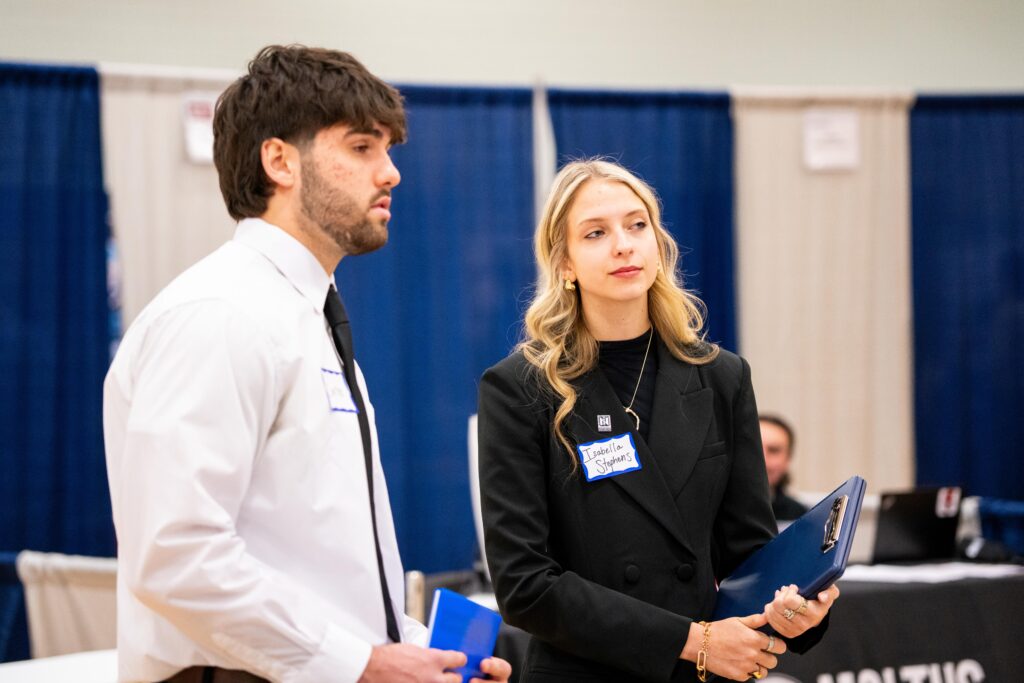
Great leaders understand that success is built on people. At Northwood, emotional intelligence is developed alongside technical and business expertise, equipping students to lead with awareness, empathy, and integrity. With emotional intelligence, people can read a room, navigate conflict, motivate diverse teams, and earn trust.
By developing this skill alongside business acumen, you become prepared to lead in environments where relationships matter as much as results. The outcome is leaders who earn followership, not by authority, but by respect. By emphasizing self-awareness, interpersonal communication, and ethical decision-making, Northwood prepares graduates to lead teams through change, challenge, and growth. The result is leaders who don’t just manage tasks. They inspire people, strengthen cultures, and elevate performance.
1. Leadership Skills
The Skill That Pulls Everything Together
Every successful organization has one thing in common: someone steps forward when it matters. Not because they were told to, but because they know how to lead.
Students don’t wait until graduation to practice it. They lead teams, make decisions with real consequences, and learn how to rally others around a clear purpose. Over time, leadership becomes more than confidence; it becomes judgment. The ability to see the whole picture, connect people to outcomes, and move ideas into action. It is the skill that holds everything else together.
At Northwood University, bachelor degree students are trained to lead in real-world environments where decisions carry weight, people matter, and outcomes are measurable. They learn how to communicate properly, take ownership under pressure, and guide teams toward shared goals. Through experiential learning, industry collaboration, and constant application, Northwood students develop the confidence and competence to step forward when it counts.
Why These Skills Matter More Than Ever
Your Future All Depends on the School You Choose

You won’t be able to understand the true value of your bachelor degree until you graduate. It’s the sweet spot of time where your bachelor degree opens a whole new branch of positions for you. Combined with your skills, it lets you stand out amongst all the candidates.
Especially in this day and age, your skills matter. More and more candidates come in with what is now the bare minimum: a bachelor’s degree. Due to these changes, employers are forced to look at other factors, like what makes you a good fit.
Your ability to get a job depends on whether companies think you are equipped enough to hit the ground running, specifically if you have had real-world experience in the field.
An indication of this is your application of the knowledge you’ve gathered in post-secondary, but most of the time, it can also be an indication of how behind you are. Unfortunately, a large number of schools nowadays forget about the world that awaits students outside of academia. Some schools only focus on theory, but at the end of the day, no amount of papers will get you a job.
So, when your interview comes, you don’t really know how to manage a team. Universities, like Northwood University, naturally embed internships and real-world application into your curriculum, building these necessary top skills. Graduates who develop these skills don’t lock themselves into one path. They gain the flexibility to pivot, grow, and lead across industries.
They don’t just enter the workforce; they shape it. Choosing a business program that emphasizes real-world application, leadership development, and professional readiness ensures that students graduate with more than just knowledge.